Corporate team building activities have changed.
For a long time, many companies treated team building as a quick game, a fun break or a one-time event to make employees interact. But today, teams need more than entertainment. They need moments that help them build trust, improve communication, collaborate better and feel connected to the culture of the company.
In hybrid, fast-paced and high-pressure work environments, people can work together every day without actually feeling connected. Meetings happen. Projects move forward. Deadlines are met. But relationships can become transactional, and teams may start operating in silos.
That is where corporate team building activities can make a difference.
When designed with intention, they create space for people to interact beyond job titles, strengthen collaboration and build shared memories for people to interact beyond job titles, strengthen collaboration and build shared memories that support a healthier work environment.
In this article, you will find corporate team building ideas for different goals, including communication, creativity, leadership, trust, employee engagement and workplace culture.
Corporate team building activities are structured experiences designed to help employees connect, collaborate and develop stronger relationships at work.
They can include creative workshops, group challenges, sensory experiences, leadership exercises, communication games, problem-solving activities, collaborative art projects and facilitated conversations.
The most important point is that team building should not be random.
A good activity has a clear purpose. It helps the team practice something the company wants to strengthen, such as trust, communication, creativity, collaboration, belonging or leadership.
That is why a team building activity is different from a simple break or a casual game. It is not just about having fun. It is about creating conditions for better teamwork.
Teams do not become strong only because they share goals. They become strong when people trust each other, communicate clearly and understand how their individual contributions affect the collective result.
Corporate team building matters because it helps companies work on the human side of performance.
It can support moments such as onboarding, leadership development, company retreats, strategy meetings, cultural transformation, employee engagement programs, internal events and relationship-building experiences.
Team building activities can help companies:
improve communication;
strengthen collaboration;
reduce distance between departments;
increase trust;
support employee engagement;
create shared memories;
develop leadership behaviors;
encourage creativity;
reinforce workplace culture;
make corporate events more meaningful.
The goal is not to replace good management, clear processes or strategic planning. Team building works best when it supports a broader culture strategy.
Before choosing an activity, the first question should not be “what sounds fun?”
The first question should be:
What does this team need right now?
A team that is going through change may need reflection and trust. A new team may need connection and onboarding. A leadership group may need decision-making and communication. A creative team may need inspiration and experimentation.
To choose the right corporate team building activity, consider five points.
Do you want to improve communication, integrate new employees, strengthen culture, celebrate results, develop leaders or reconnect hybrid teams?
The clearer the goal, the easier it is to choose the right format.
Executives, new hires, sales teams, HR professionals, creative teams and operational teams may respond differently to the same activity.
A strong team building experience respects the profile of the participants.
Some activities work better in person. Others can be adapted to online or hybrid environments.
In-person team building is especially powerful when the goal is emotional connection, sensory experience, collaboration or culture building.
Team building should create safety, not embarrassment.
Activities that force people to perform, reveal too much personal information or compete aggressively can have the opposite effect.
The best team building activities create a bridge between the experience and the team’s everyday reality.
After the activity, people should be able to reflect on what happened and how it connects to communication, leadership, collaboration or culture.
Below are team building activity ideas organized by purpose.
Communication is one of the most common challenges in companies. These activities help teams practice listening, clarity and alignment.
One person describes an image while another person tries to draw it without seeing the original.
At the end, the group compares the result with the original image and discusses what helped or blocked communication.
This activity is simple, but very effective. It shows how assumptions, unclear instructions and lack of listening can affect outcomes.
Participants work in pairs. One person speaks for a few minutes about a work-related question, while the other only listens. Then they switch roles.
After the exercise, the group reflects on what it feels like to be heard without interruption.
This activity works well for leadership sessions, HR workshops and teams that need to improve active listening.
A message is passed from person to person. At the end, the final version is compared with the original.
This activity helps teams understand how information changes when it moves through different people, departments or levels of the company.
It is especially useful for internal communication discussions.
The group must complete a simple challenge without speaking. It may involve organizing objects, building a sequence or solving a visual puzzle.
This activity helps participants explore nonverbal communication, observation and group coordination.
Collaboration is more than working next to each other. It means building together, sharing responsibility and understanding interdependence.
Each participant creates one part of a larger artwork. The final result only appears when all pieces are connected.
This type of activity is powerful because it creates a clear metaphor: every individual contribution matters, but the collective result depends on how all parts come together.
At Vinho Tinta, the Mosaico Coletivo experience uses this idea to help companies work on collaboration, belonging and interdependence.
Teams receive different materials and need to complete a shared challenge. To succeed, they must negotiate, exchange resources and collaborate with other groups.
This activity works well when the company wants to discuss silos, cooperation and shared goals.
The group receives a list of small tasks that need to be completed within a limited time.
To succeed, participants must divide responsibilities, organize priorities and communicate quickly.
This is a good activity for project teams, sales teams and fast-paced departments.
Each group receives part of the information needed to solve a challenge. No one has the full picture alone.
The goal is to show that collaboration often depends on sharing information, asking better questions and trusting other people’s perspectives.
Creative activities help people move away from automatic thinking and explore new ideas.
Participants create their own artwork through a guided painting session.
This kind of activity helps people relax, experiment and express themselves in a different way. It also creates a less formal environment for conversation and connection.
At Vinho Tinta, art and wine are used to create corporate experiences that combine creativity, sensory connection and team bonding.
Each participant receives a random line or shape and has to transform it into a drawing.
The group then shares the different results.
This simple activity shows how people can interpret the same starting point in completely different ways.
Teams create a product that sounds impossible or unusual. Then, they build a short pitch to make it sound valuable.
This activity is fun, but it also develops storytelling, creativity, persuasion and collaboration.
Participants choose colors that represent the current energy, challenge or identity of the team.
The group can then create a shared visual composition using those colors.
This activity works well in creative workshops, culture sessions and team reflection moments.
Leadership team building activities help participants practice decision-making, presence, listening and responsibility.
During a group challenge, the leadership role changes every few minutes.
Each person has the opportunity to guide the team, make decisions and adapt their communication style.
After the activity, the group reflects on what leadership behaviors helped the team move forward.
Teams receive a fictional business scenario with incomplete information. They must make a decision within a short time.
After the exercise, participants discuss how they made decisions, what information they prioritized and how pressure affected the group.
This activity is especially useful for managers, executives and high-responsibility teams.
Participants receive a leadership situation, such as a conflict between team members, low engagement, resistance to change or poor communication.
The group discusses possible approaches and consequences.
This activity encourages empathy, critical thinking and leadership maturity.
Each leader writes a short letter to their future self about the kind of leadership they want to practice.
The activity can be followed by a group conversation about values, behaviors and commitments.
This is a more reflective option for leadership retreats and development programs.
Employee engagement depends on connection, meaning and participation. These activities help people feel seen and included.
Each person shares one small win from the week or month.
It can be a result, a learning, a difficult conversation or a moment of progress.
This activity helps build recognition and creates a positive emotional tone for the group.
Participants write short notes recognizing contributions from colleagues.
The notes can be displayed on a wall, board or shared digital space.
Recognition does not need to be complex to be meaningful. Small acknowledgments can strengthen trust and belonging.
Choose one company value and ask participants to share examples of how that value appears in real work situations.
This helps transform culture from a statement into lived behavior.
The activity works well in onboarding, internal events and culture programs.
Corporate events are a great opportunity to create experiences that people will remember after the agenda ends.
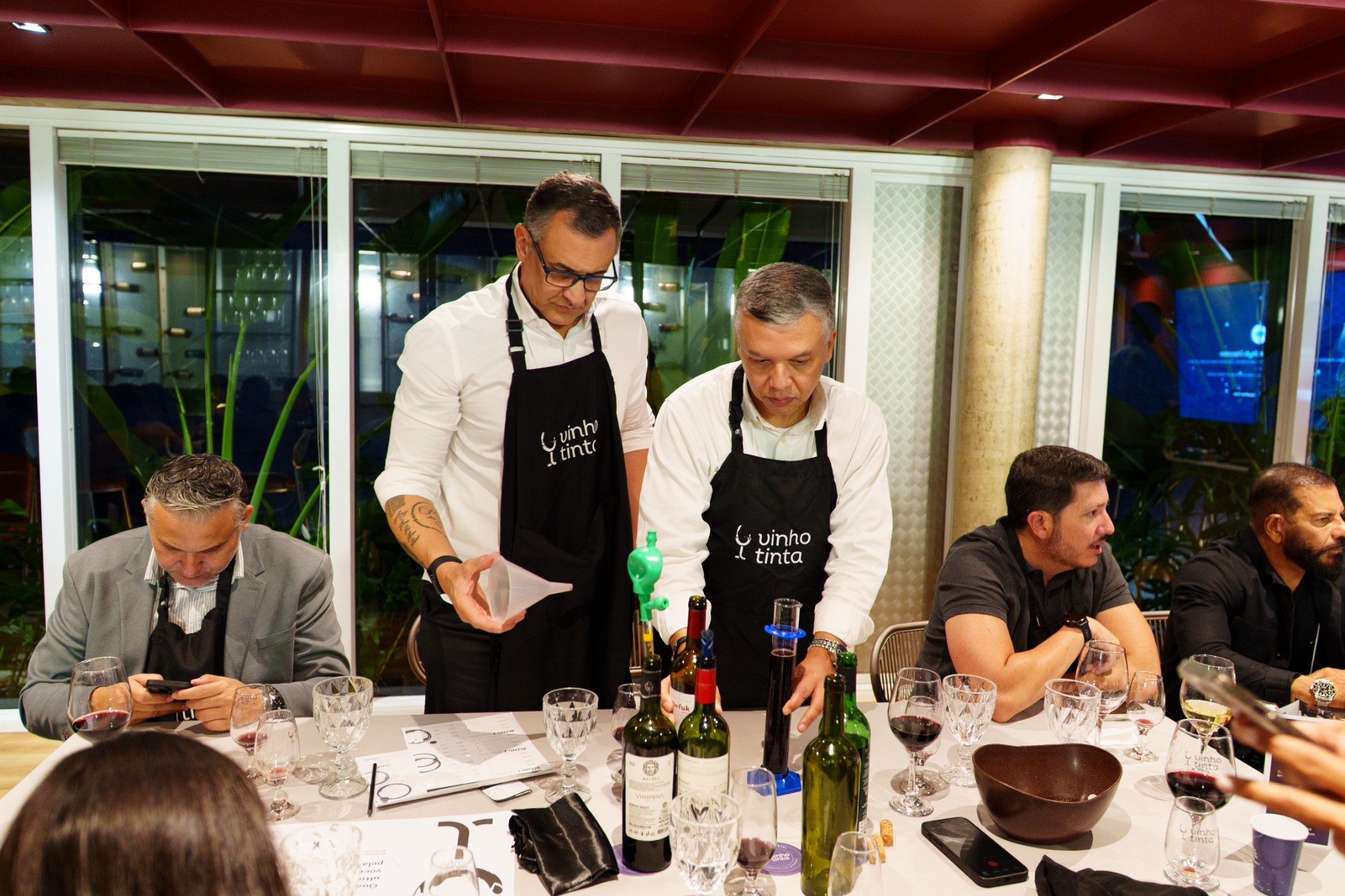
Participants explore flavors, aromas and perceptions through a guided wine experience.
This format can open conversations about attention, decision-making, repertory, communication and relationship building.
It is a strong option for executive groups, client relationship events and premium corporate gatherings.
At the end of an event, invite participants to make a collective toast around a shared theme, such as trust, collaboration, courage or a new cycle.
It is simple, elegant and symbolic.
A collective toast can help close the experience with meaning, especially when connected to the company’s goals or the purpose of the event.
Hybrid teams need intentional connection.
When people work partly remotely and partly in person, many interactions become practical and task-oriented. This can be efficient for execution, but it may weaken relationships over time.
That is why in-person moments need to be more meaningful.
A corporate team building activity can help hybrid teams reconnect, strengthen trust and create memories that digital communication alone does not always provide.
For hybrid teams, the best activities are usually those that create participation without excluding remote members or making the in-person group feel disconnected from the online experience.
If the goal is deeper connection, however, an in-person experience can be especially valuable. It gives people a reason to be present beyond a meeting agenda.
A team building activity is effective when it creates a meaningful experience and connects back to the team’s reality.
It should not feel like a random break.
A strong corporate team building experience usually includes three moments.
Before the activity, participants should understand why they are doing it.
Is the goal to build trust? Improve communication? Celebrate a cycle? Strengthen culture? Reconnect as a team?
Context gives meaning to the experience.
The activity itself should invite participation in a way that feels safe, clear and engaging.
People should know what to do, but also have enough freedom to interact, create and observe the group dynamic.
After the activity, the team should have a moment to connect the experience to the workplace.
Useful questions include:
What did we notice about how we worked together?
What helped the group move forward?
What made collaboration harder?
What can we take from this experience into our daily work?
This reflection is what turns an activity into learning.
Not every team building activity creates positive results.
Some common mistakes include choosing activities without a clear goal, forcing people to participate in uncomfortable ways, making everything too competitive, using childish games for executive audiences, ignoring the team’s real challenges or skipping the reflection moment.
Another mistake is treating team building as a solution for structural problems.
If a team is overloaded, poorly managed or facing serious conflict, a single activity will not solve everything. But it can open space for conversation and become part of a broader culture strategy.
Team building should not hide problems. It should help people face them with more trust, presence and openness.
Vinho Tinta creates corporate experiences that combine art, wine, sensory elements and facilitation to help teams connect in a more human and creative way.
The goal is not just to make people participate in an activity. It is to design a moment that makes sense for the company, the audience and the team’s current challenges.
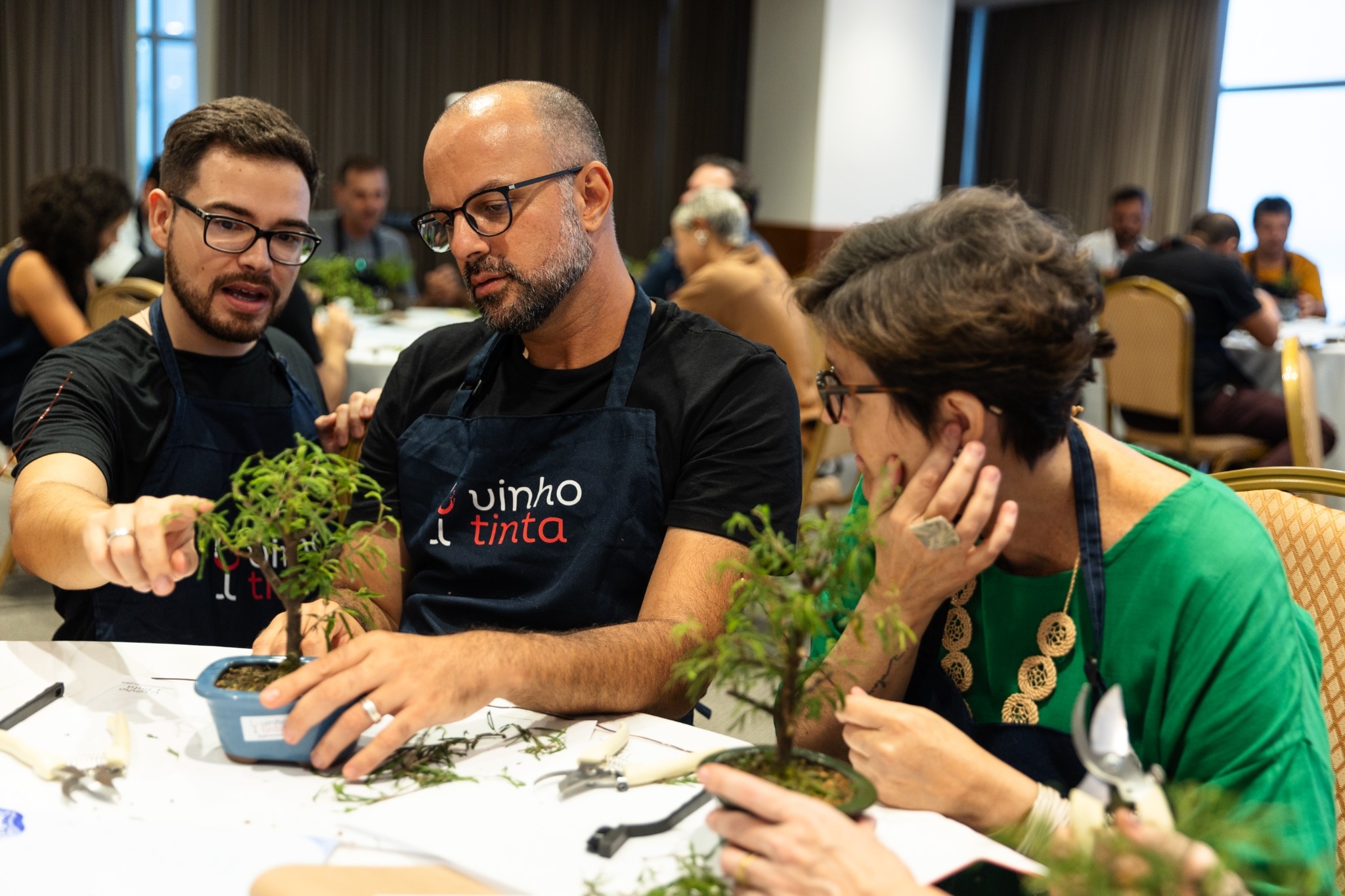
Experiences such as Vinho & Tinta, Mosaico Coletivo, Academia do Vinho and A Arte do Bonsai can support different goals, including collaboration, leadership, creativity, relationship building, employee engagement and organizational culture.
The experience can be light and celebratory. It can be reflective and strategic. It can be sensory, creative or collaborative.
What matters is that it starts with the right question:
What does this team need to strengthen now?
Corporate team building activities can help companies create stronger, more connected and more collaborative teams.
But the best activities are not chosen because they are trendy or fun. They are chosen because they match the team’s context, respect the audience and support a clear purpose.
In a workplace where people often move from task to task without time to connect, team building creates a necessary pause.
It gives people the chance to listen, create, collaborate and see each other beyond roles and deadlines.
When done well, corporate team building is not just an event. It becomes a shared experience that helps culture become something people can actually live.
Looking for corporate team building activities with more meaning?
Vinho Tinta creates creative and sensory experiences for companies that want to strengthen collaboration, connection, culture and employee engagement.
Talk to our team and discover the best experience for your company.
Use these links naturally throughout the article:
Corporate team building activities are structured experiences designed to help employees connect, collaborate and build stronger relationships at work.
The best activities depend on the team’s goal. For communication, listening pairs and message transformation work well. For collaboration, collective mosaics and shared challenges are strong options. For creativity, guided painting and sensory experiences can be effective.
Team building activities help improve communication, trust, collaboration, employee engagement and workplace culture. They also create shared experiences that support stronger team relationships.
A simple activity can last 15 to 30 minutes. A deeper corporate team building experience can last from one hour to half a day, depending on the objective and group size.
Yes. Hybrid teams can benefit from team building because it helps create intentional moments of connection between people who may not interact deeply in daily digital communication.
Team bonding focuses mainly on connection and relationships. Team building is broader and can include collaboration, communication, leadership, trust, culture and shared goals.
Start with the goal. Understand whether the team needs communication, collaboration, creativity, leadership, engagement or culture building. Then choose an activity that matches the audience, format and company context.
Yes. Creative activities can help people relax, express themselves and collaborate in new ways. They are especially useful when the goal is connection, creativity, belonging and shared experience.